

Ultra Light Outdoor Gear: Essential Guide for 2026
RankPill on 23rd Feb 2026
The pursuit of lighter kit has transformed how outdoor enthusiasts approach wilderness adventures. Whether you're embarking on multi-day backpacking expeditions or weekend camping trips, reducing pack weight enhances mobility, decreases fatigue, and opens up routes previously considered too demanding. Understanding the principles behind ultra light outdoor gear enables you to make informed decisions about which items deserve a place in your pack and which traditional camping staples can be reimagined or eliminated entirely.
The Philosophy Behind Weight Reduction
Ultralight backpacking represents more than simply purchasing expensive equipment. It's a systematic approach to assessing every item's necessity, functionality, and weight-to-value ratio.
The movement typically categorises pack weights into distinct levels. Traditional backpacking loads often exceed 13.6 kilograms (30 pounds) for base weight alone. Lightweight backpackers aim for 9 kilograms (20 pounds), whilst ultralight practitioners target 4.5 kilograms (10 pounds) or less.
Base weight calculations exclude consumables such as food, water, and fuel. This measurement provides the foundation for comparing gear efficiency across different setups.
Understanding the Trade-offs
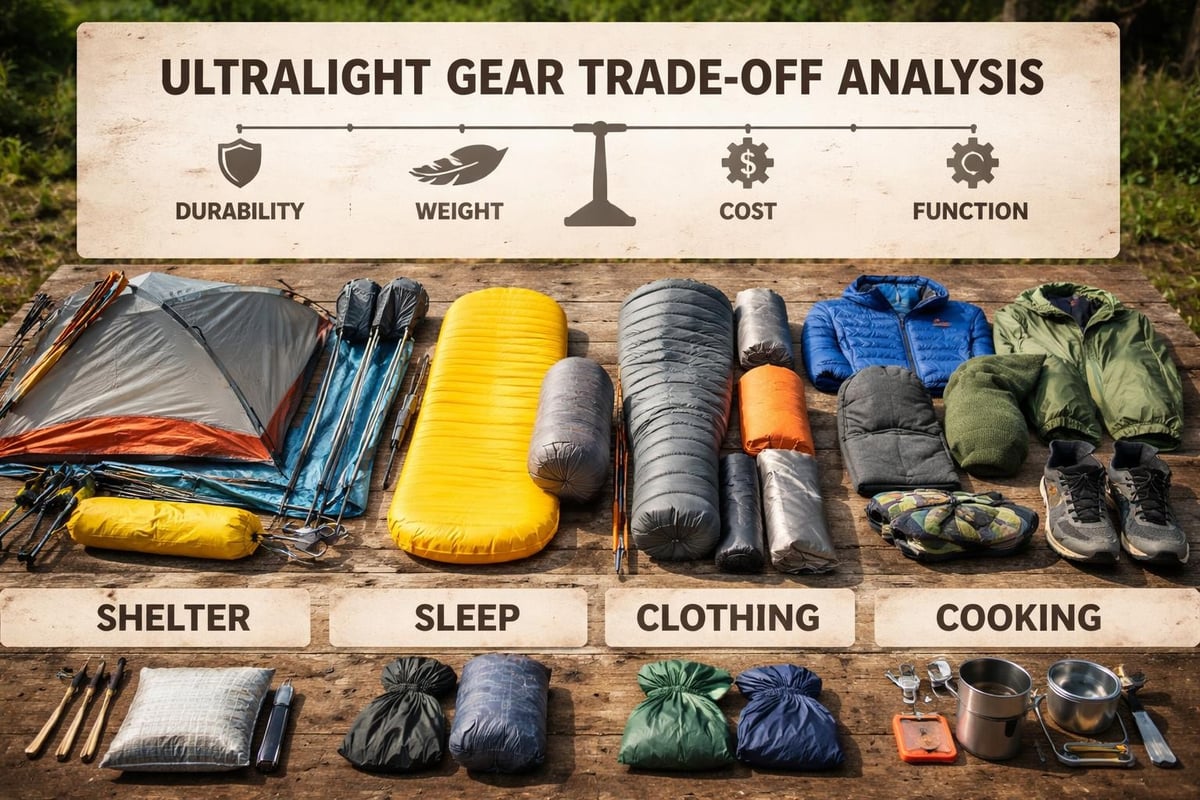
Every piece of ultra light outdoor gear involves compromises between weight, durability, comfort, and cost. A 600-gram tent might last three seasons instead of ten years, but for many adventurers, this represents acceptable value.
Key considerations when evaluating lightweight gear:
- Durability versus weight savings
- Multi-functionality of individual items
- Seasonal and environmental suitability
- Skill level required for proper use
- Long-term cost implications
Essential Categories for Weight Optimisation
Shelter Systems
Shelter traditionally represents one of the heaviest items in any outdoor kit. Modern ultra light outdoor gear has revolutionised this category through innovative materials and minimalist designs.
Tarps offer exceptional versatility whilst weighing between 200 and 600 grams depending on size and material. The Outhaus tarp range demonstrates how quality materials can deliver both protection and reasonable weight figures. Learning 10 great reasons to try tarp camping might convince sceptics that traditional tent structures aren't always necessary.
| Shelter Type | Typical Weight | Pros | Cons |
|---|---|---|---|
| Ultralight Tent | 800g - 1.5kg | Full protection, easy setup | Higher cost, limited space |
| Tarp | 200g - 600g | Versatile, lightweight | Requires skill, less protection |
| Bivy Sack | 300g - 500g | Minimal weight | Claustrophobic, condensation issues |
| Hammock System | 600g - 1.2kg | Comfortable, versatile | Requires trees, complex setup |
Single-wall shelters eliminate separate rainflies, saving weight but potentially increasing condensation. Double-wall designs provide better moisture management at the expense of additional grams.
Sleep Systems
Quality rest remains non-negotiable regardless of weight targets. Your sleep system comprises sleeping bag or quilt, sleeping pad, and potentially a pillow.
Quilts eliminate the compressed insulation beneath you that provides minimal warmth, saving 200-400 grams compared to traditional sleeping bags. This design maximises thermal efficiency by focusing insulation where it matters most.
Sleeping pad options ranked by weight:
- Closed-cell foam (300-450g) - bombproof but bulky
- Inflatable ultralight (250-400g) - compact but vulnerable
- Self-inflating (500-900g) - comfortable but heavier
- Hybrid designs (350-550g) - balanced approach
When selecting essential warm outdoor clothing, consider layering systems that integrate with your sleep setup. A good down jacket serves dual purposes as camp wear and supplementary sleeping bag insulation.
Cooking Equipment
Many ultralight enthusiasts question whether cooking facilities justify their weight. Cold-soaking meals eliminates stove systems entirely, saving 300-600 grams including fuel canister.
For those unwilling to forgo hot meals, titanium cookware, alcohol stoves, or integrated canister systems offer efficient solutions. A basic titanium pot weighing 100 grams paired with a 30-gram alcohol stove provides hot food and drinks for minimal weight penalty.
The outdoor cooking made easy approach at Outhaus recognises that culinary enjoyment enhances outdoor experiences, making sensible weight investments in cooking gear worthwhile for many adventurers.
Clothing and Layering Strategies
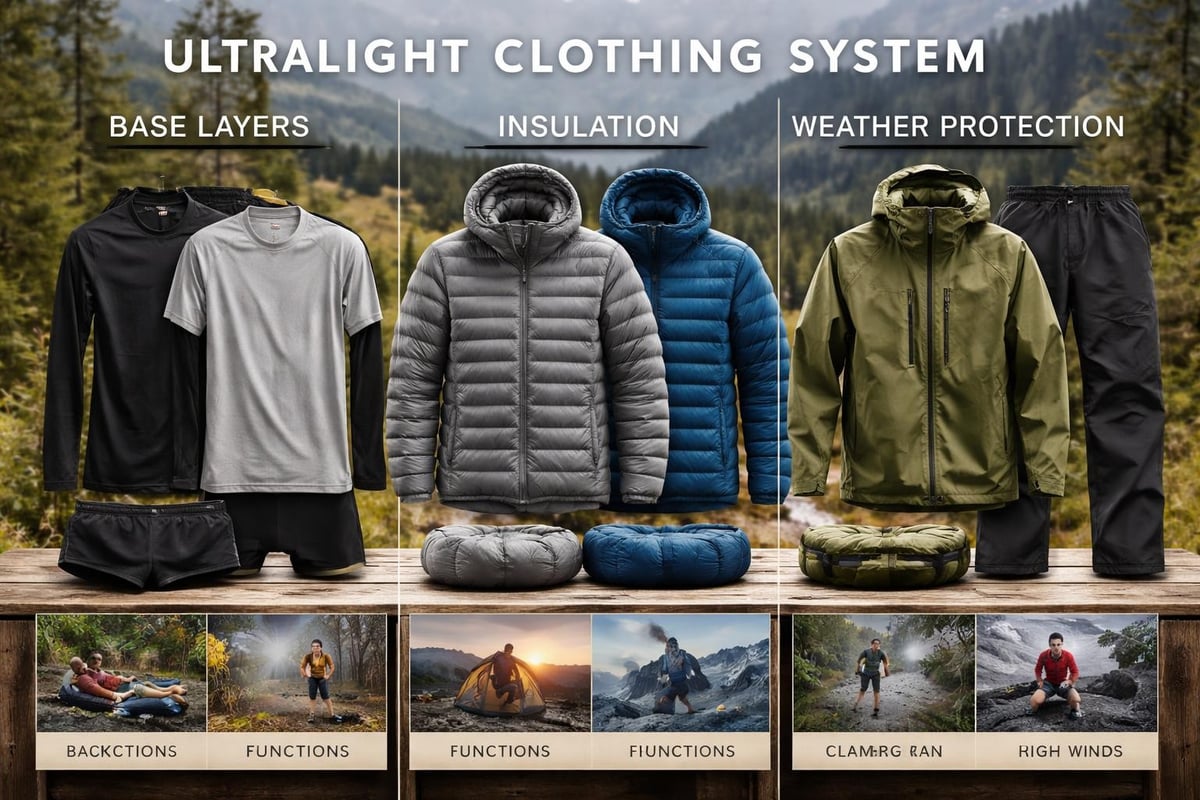
Ultra light outdoor gear extends beyond equipment into strategic clothing choices. The layering principle remains fundamental, but material selection and quantity require careful consideration.
Base Layers and Active Wear
Merino wool and synthetic fabrics each offer distinct advantages. Merino resists odours, allowing extended wear between washes, whilst synthetics dry faster and cost less.
Carrying one base layer worn continuously and one spare for sleeping reduces weight compared to daily changes. This approach requires acceptance of lower hygiene standards than home life permits.
Insulation Options
Down jackets provide exceptional warmth-to-weight ratios in dry conditions. A quality 200-gram down jacket delivers warmth equivalent to 400 grams of synthetic insulation.
Synthetic insulation maintains thermal properties when wet, making it preferable for maritime climates or winter conditions where moisture exposure is inevitable. The best waterproof rain jacket picks for 2026 complement insulation layers by keeping everything dry.
Weather Protection
Rain gear represents another significant weight consideration. Lightweight jackets using 2.5-layer waterproof breathable fabrics weigh 150-300 grams, whilst more durable 3-layer constructions reach 400-600 grams.
When light is right depends on trip duration and conditions. Weekend trips tolerate less durable lightweight options, whilst extended expeditions justify additional grams for enhanced reliability.
Pack Selection and Organisation
Your backpack should weigh approximately 800-1200 grams for ultralight applications. Frameless packs suit loads under 9 kilograms, whilst minimal frame designs accommodate up to 13.5 kilograms comfortably.
Volume Considerations
Ultralight enthusiasts typically manage with 40-50 litre packs for multi-day trips. Efficient packing techniques and strategic gear choices eliminate the need for larger volumes.
Pack organisation tips for weight efficiency:
- Use stuff sacks sparingly; they add weight
- Consolidate similar items in one location
- Keep frequently accessed items easily reachable
- Balance load distribution for comfort
- Eliminate redundant compartments and features
Technology and Gadgets
Modern technology offers numerous weight-saving opportunities, though must-have outdoor gadgets for adventurers must justify their inclusion through genuine utility.
Navigation has shifted from paper maps and compasses to smartphone applications, saving 100-200 grams. Backup power banks (100-300g) ensure devices remain operational throughout extended trips.
Headlamps now weigh 50-80 grams whilst delivering 200+ lumens, adequate for all camp tasks and emergency navigation. Solar chargers and emergency communication devices represent discretionary additions based on trip parameters.
Water Treatment and Hydration
Clean water access remains critical for wilderness travel. Ultra light outdoor gear solutions range from chemical treatments (30 grams) to squeeze filters (100 grams) and UV purifiers (120 grams).
Carrying capacity influences pack weight significantly. One litre of water weighs one kilogram, making strategic water source planning essential for weight management.
Water carrying options:
| Container Type | Weight (1L capacity) | Durability | Versatility |
|---|---|---|---|
| Disposable bottle | 30g | Low | Limited |
| Collapsible bladder | 50g | Medium | High |
| Hard bottle | 150g | High | Medium |
| Smart Water bottle | 40g | Medium | High |
Ultralight backpacking gear vendors offer specialised water containers designed specifically for weight-conscious adventurers, often incorporating features like measurement markings and wide mouths for easier filling.
Material Science Advancements
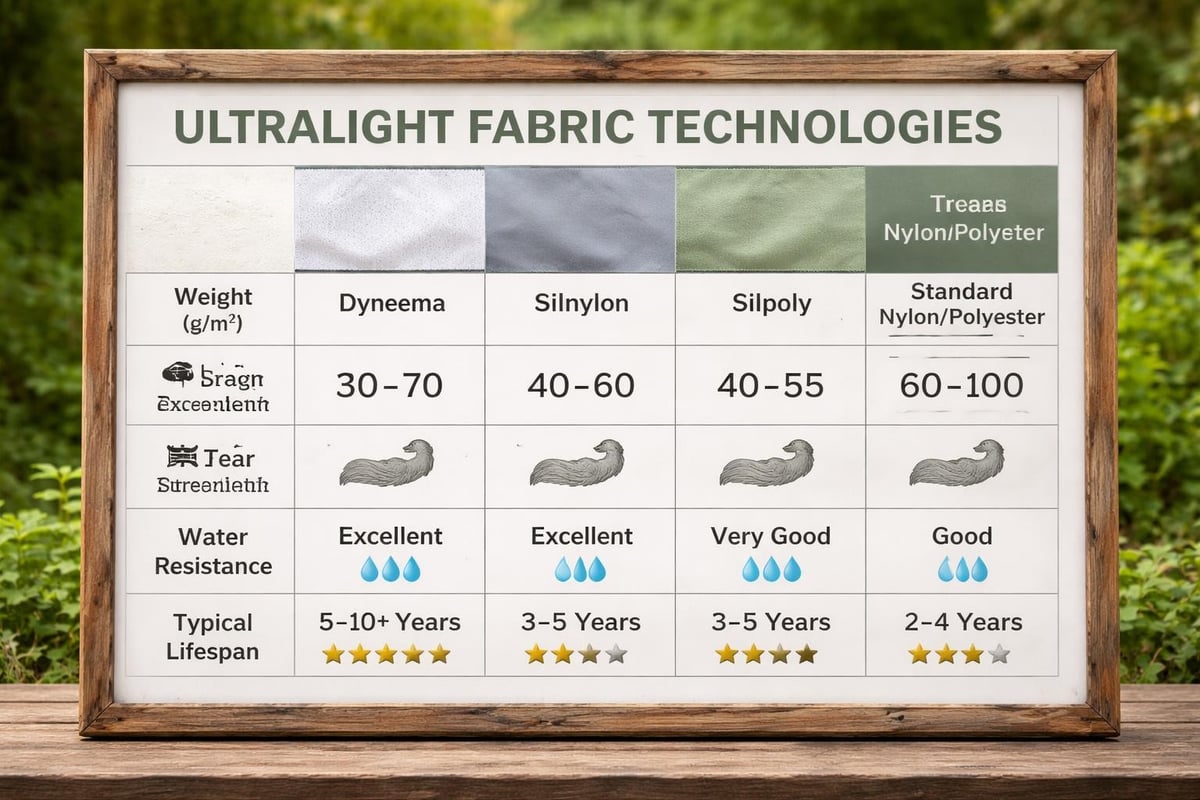
Recent innovations in fabric technology have revolutionised ultra light outdoor gear capabilities. Dyneema Composite Fabric (formerly Cuben Fiber) delivers exceptional strength-to-weight ratios, though at premium prices.
Silnylon and silpoly fabrics balance weight, durability, and cost effectively for tarps and lightweight shelters. These materials typically weigh 30-45 grams per square metre whilst maintaining adequate weather resistance.
Performance Versus Longevity
The best ultralight backpacking gear often sacrifices long-term durability for immediate weight savings. Understanding this trade-off prevents disappointment and enables realistic budgeting for periodic replacements.
Premium ultralight items might cost three times more than standard alternatives whilst lasting half as long. For occasional users, this equation doesn't balance favourably. Frequent adventurers, however, value the cumulative benefits of reduced weight across hundreds of kilometres.
Safety Considerations and Emergency Equipment
Weight reduction should never compromise safety. First aid kits, emergency shelters, fire-starting capabilities, and navigation tools represent non-negotiable items regardless of weight targets.
Minimalist first aid approaches focus on likely scenarios rather than comprehensive coverage. A 100-gram kit addresses common injuries (blisters, cuts, strains) whilst prescription medications and personal requirements add minimal weight.
Emergency shelter options like ultralight bivies (100-200g) or emergency blankets (50g) provide critical backup if primary shelter fails. The marginal weight penalty delivers substantial peace of mind.
Weather-Specific Preparations
Conditions dictate which safety items accompany you. Summer trips might eliminate insulated jackets, whilst winter expeditions require additional layers, protection, and emergency provisions.
The 7 ways to warm winter camping guide illustrates how strategic gear choices maintain comfort in challenging conditions without excessive weight penalties.
Skills Development and Experience
Ultra light outdoor gear effectiveness correlates directly with user competence. A 300-gram tarp provides adequate shelter only if you possess the skills to pitch it properly in varied conditions.
Investing time in learning proper techniques delivers better results than simply purchasing lighter equipment. Practice shelter pitching, navigation, weather reading, and emergency procedures before committing to remote ultralight expeditions.
Essential skills for ultralight success:
- Shelter pitching in various configurations
- Efficient packing and organisation
- Weather pattern recognition
- Route planning with water source identification
- Gear repair and field maintenance
- Leave No Trace principles
Financial Planning and Budget Approaches
Complete ultralight kit replacement represents significant investment, often exceeding £3,000-£5,000 for premium items. Strategic upgrades based on individual needs deliver better value than wholesale replacement.
Identify the "big three" items (shelter, sleep system, pack) for initial upgrades, as these offer the most substantial weight savings. A 1-kilogram reduction across these three categories transforms pack weight dramatically.
How ultralight outdoor gear works in commercial markets reveals pricing structures and value propositions, helping consumers make informed purchasing decisions.
Second-Hand Markets and Alternatives
Pre-owned ultralight equipment offers entry points at reduced costs. Cottage manufacturers often maintain enthusiastic communities where gear trades hands regularly, providing access to premium items at reasonable prices.
DIY solutions suit certain categories excellently. Making your own alcohol stove costs £5 and weighs 15 grams. Creating a down quilt requires moderate sewing skills but saves hundreds of pounds compared to commercial equivalents.
Seasonal Adaptations and Versatility
Ultra light outdoor gear configurations vary substantially between seasons. Summer setups might achieve 3-kilogram base weights, whilst winter expeditions reasonably reach 7-8 kilograms.
Shoulder seasons present particular challenges, requiring flexibility to handle variable conditions. Modular systems allowing incremental additions serve these transitions better than fixed configurations.
The ultralight outdoor gear awards 2025 recognise innovative products addressing seasonal adaptability, helping consumers identify versatile options worthy of investment.
Testing and Refinement Processes
Developing your optimal ultra light outdoor gear configuration requires iterative testing. Weekend trips provide low-risk opportunities to evaluate new items and systems before committing to extended expeditions.
Document each outing's gear performance, noting what worked effectively and what caused issues. This systematic approach identifies genuine needs versus perceived requirements, enabling evidence-based refinement.
Effective testing methodology:
- Start with familiar terrain and conditions
- Change one variable per outing
- Record actual (not estimated) weights
- Note comfort levels and any deficiencies
- Assess durability after each trip
- Consider seasonal variations
Progressive distance and duration increases build confidence whilst revealing equipment limitations before critical situations arise. A failed experiment 5 kilometres from the trailhead proves merely inconvenient; the same failure 50 kilometres into wilderness presents genuine challenges.
Regional Considerations for UK Adventurers
British conditions differ markedly from those in many ultralight gear development regions. Higher rainfall, changeable weather, and temperate rather than extreme temperatures influence optimal equipment choices.
Prioritising weather protection over extreme lightweight credentials makes sense for UK applications. A 300-gram jacket providing reliable waterproofing serves better than a 150-gram option failing in persistent rain.
Canvas materials, whilst heavier than modern synthetics, offer exceptional durability for British conditions. Outhaus canvas swags demonstrate how traditional materials deliver reliable performance despite weight disadvantages, particularly for basecamp or vehicle-supported adventures where ultra light outdoor gear principles apply less rigorously.
Community Resources and Continued Learning
Engaging with experienced ultralight communities accelerates learning and prevents costly mistakes. Online forums, blogs, and gear review sites provide valuable insights from practitioners with thousands of kilometres experience.
Ultralight Outside and similar resources offer detailed reviews, comparison testing, and theoretical discussions helping newcomers navigate the overwhelming array of options.
Local hiking groups and outdoor clubs provide opportunities to examine gear firsthand, ask questions, and potentially borrow items for testing before purchasing. This hands-on evaluation proves invaluable for assessing personal fit and functionality.
Maintenance and Longevity Strategies
Lightweight materials often require more careful handling and maintenance than traditional robust alternatives. Proper care extends lifespan substantially, maximising value from premium equipment investments.
Repair skills become essential when using delicate fabrics. Carrying a small repair kit (20-30 grams) including tape, patches, and thread prevents minor damage from ending trips prematurely.
Maintenance priorities for ultralight equipment:
- Clean gear promptly after trips
- Store items properly to prevent damage
- Address small repairs immediately
- Use stuff sacks for delicate items
- Avoid unnecessary compression
- Follow manufacturer care instructions
Regular inspections identify developing issues before they become critical failures. Seam sealing, waterproofing treatments, and component replacements performed proactively maintain performance and safety standards.
Adopting ultra light outdoor gear principles transforms wilderness experiences through enhanced mobility and reduced fatigue, though success requires balancing weight savings against durability, comfort, and safety requirements. Strategic equipment choices combined with skill development deliver optimal results across varied British conditions. Whether you're ready to invest in specialised lightweight equipment or seeking reliable shelter solutions that prioritise durability, Outhaus provides quality outdoor gear designed to enhance your camping adventures with products built to perform across seasons and conditions.