

Hiking Snow Pants: Essential Guide for Winter Adventures
RankPill on 18th Feb 2026
When winter transforms hiking trails into snowy wonderlands, the right gear becomes absolutely essential for both safety and comfort. While many outdoor enthusiasts focus on jackets and boots, hiking snow pants often receive less attention despite being crucial for protecting your lower body from the harsh elements. These specialized trousers serve as your primary defence against snow, wind, and freezing temperatures, making them an indispensable component of any winter hiking kit.
Understanding What Makes Hiking Snow Pants Different
Hiking snow pants differ significantly from standard ski trousers or everyday winter wear. They're engineered specifically for the demands of winter trekking, where mobility, breathability, and weather protection must work in perfect harmony. Unlike stationary winter activities, hiking generates substantial body heat, requiring garments that can regulate temperature whilst providing protection.
The primary distinction lies in their versatility and adaptability. Standard snow pants might excel on the slopes but often prove too restrictive or insufficiently breathable for the continuous movement of hiking. Similarly, regular hiking trousers lack the insulation and waterproofing needed for snowy conditions.
Key Features That Define Quality Snow Pants
Superior hiking snow pants incorporate several essential characteristics:
- Waterproof membranes (typically 10,000mm rating or higher)
- Articulated knees for natural movement
- Reinforced insteps to resist crampon and boot abrasion
- Adjustable waistbands for layering flexibility
- Ventilation zippers for temperature regulation
- Sealed seams to prevent moisture penetration
The balance between these features determines how well the trousers perform across various winter conditions. A pair lacking proper ventilation will leave you drenched in sweat during strenuous ascents, whilst inadequate waterproofing means wet legs and potential hypothermia during descents.
Material Technology and Construction
Modern hiking snow pants utilise advanced fabric technologies that would have seemed impossible a decade ago. The foundation typically involves a waterproof-breathable membrane, with Gore-Tex, eVent, and proprietary alternatives leading the market.
Shell Versus Insulated Designs
Choosing between shell and insulated hiking snow pants represents your first major decision. Shell pants consist of a waterproof outer layer without built-in insulation, allowing you to adjust warmth through base and mid-layers underneath. This approach offers maximum versatility across temperature ranges.
Insulated pants incorporate synthetic or down insulation between the shell and lining. These prove ideal for extremely cold conditions or hikers who run cold naturally. However, they're less adaptable and can cause overheating during vigorous activity.
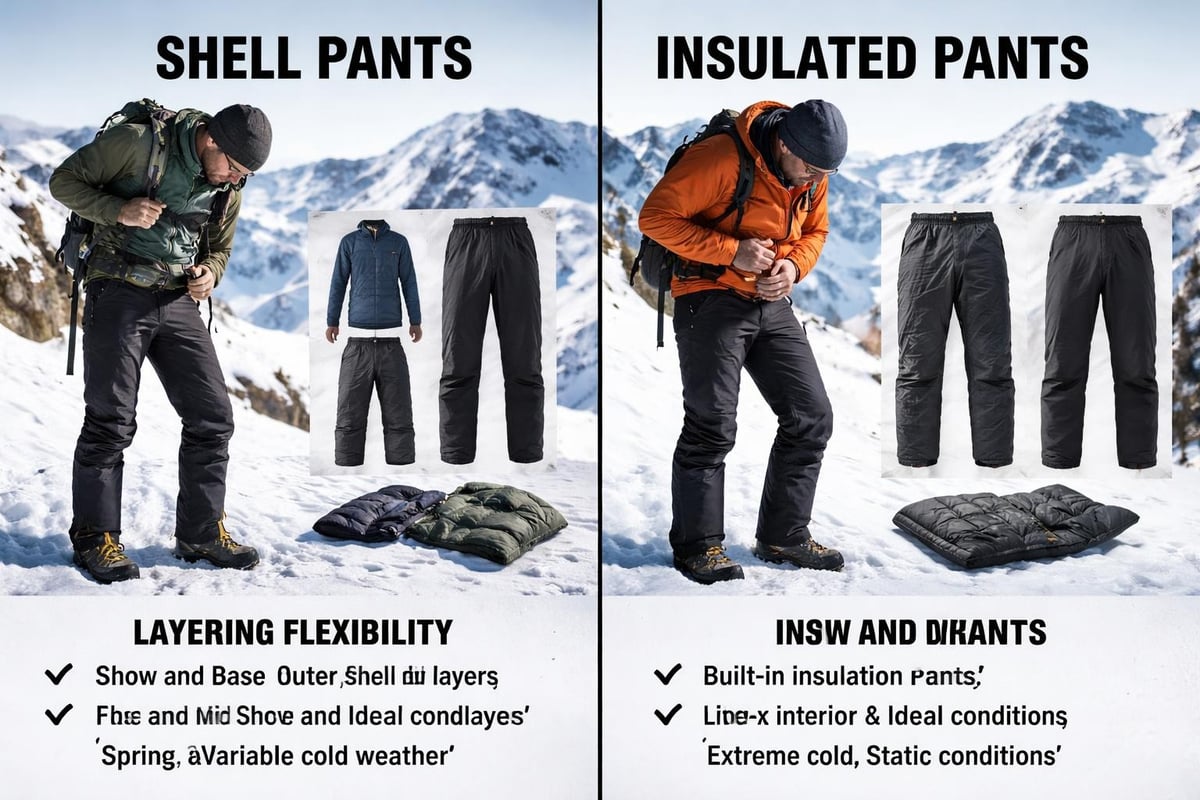
| Feature | Shell Pants | Insulated Pants |
|---|---|---|
| Versatility | Excellent - adjust with layers | Limited - fixed warmth |
| Weight | Lighter | Heavier |
| Packability | Compresses well | Bulkier |
| Temperature Range | Broad (layering dependent) | Narrow (best for extreme cold) |
| Price Point | Generally higher quality shells cost more | Variable, often mid-range |
For most UK winter hiking conditions, shell pants paired with appropriate base layers provide optimal performance. The unpredictable British weather demands adaptability that insulated designs can't match.
Selecting the Right Fit and Sizing
Proper fit transforms hiking snow pants from adequate to exceptional. Too tight, and they'll restrict movement and prevent effective layering. Too loose, and they'll catch on vegetation, create drag, and fail to retain warmth efficiently.
When assessing fit, consider wearing them over your typical base and mid-layers. The waistband should sit comfortably without requiring a belt for support, though adjustable features allow fine-tuning. Winter hiking requires careful consideration of how garments work together as a system.
Movement and Articulation
Test the following movements whilst trying hiking snow pants:
- Deep knee bends to assess articulation
- High steps simulating steep terrain navigation
- Wide stances checking for binding or restriction
- Sitting position ensuring comfort during breaks
Quality designs incorporate gusseted crotches and pre-shaped knees that move with your body rather than against it. These seemingly minor details dramatically impact comfort during full-day adventures.
The inseam length deserves particular attention. Hiking snow pants should extend to your boot laces when standing, with enough length to tuck into boots or overlap them when secured with internal gaiters. Too short exposes vulnerable ankle areas to snow ingress.
Weather Protection Features
Effective weather protection extends beyond basic waterproofing. Complete hiking snow pants systems integrate multiple defensive layers against winter's challenges.
Waterproofing and Breathability Ratings
Understanding waterproof ratings helps you select appropriate protection levels:
- 10,000mm: Light snow and short exposures
- 15,000mm: Moderate conditions and most UK winter hiking
- 20,000mm+: Extreme weather and extended expeditions
Breathability measurements (typically in grams) indicate how much moisture vapour escapes. Higher numbers mean better moisture management. A rating of 10,000g provides adequate performance for most hikers, whilst 20,000g suits those pushing harder in challenging conditions.
Sealed or taped seams prevent water penetrating stitching holes. Critically bonded seams offer superior protection compared to standard taped versions, though they increase manufacturing costs.
Strategic Ventilation Systems
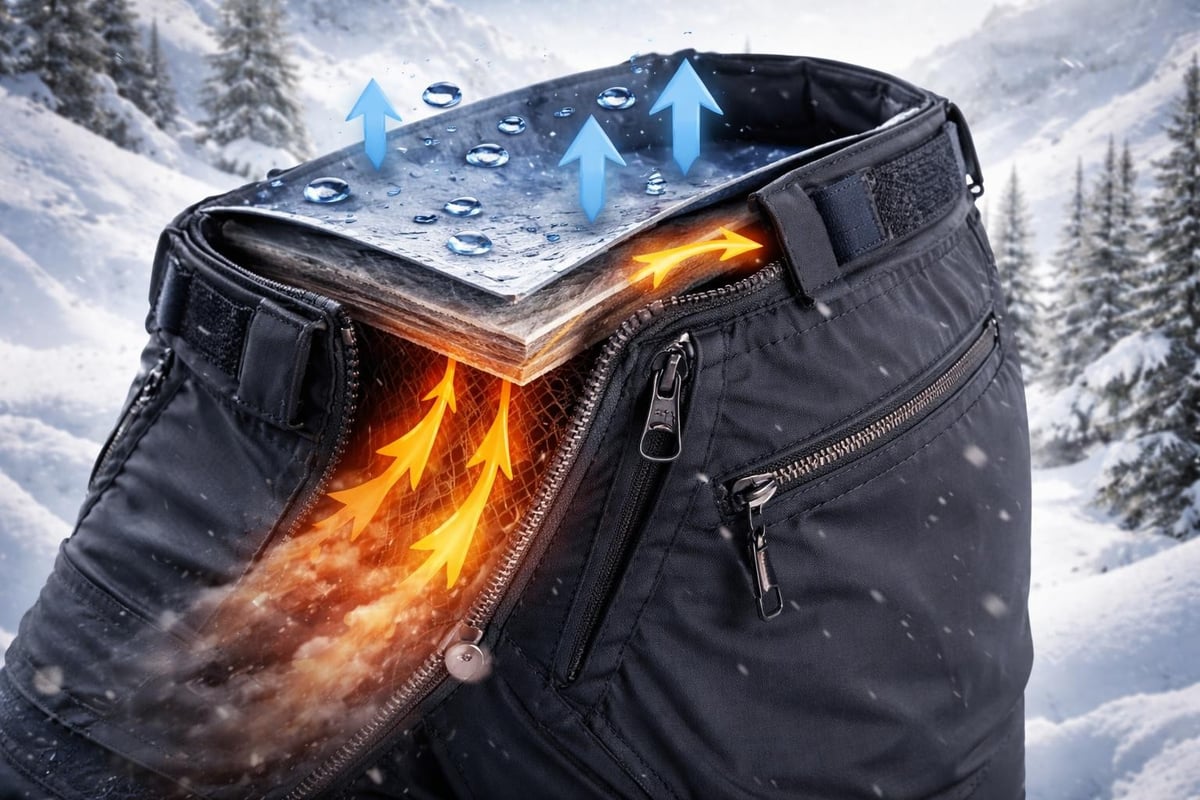
Managing internal temperature whilst hiking generates one of winter's greatest challenges. You'll sweat during climbs but chill rapidly during rest stops. Strategic ventilation allows heat dumping without removing your hiking snow pants entirely.
Side zippers running from hip to knee provide maximum airflow. Full-length versions offer complete ventilation but compromise some weather protection. Three-quarter length zippers balance airflow with coverage.
Mesh-backed vents prevent snow entry whilst promoting air circulation. This feature proves essential when breaking trail through deep powder, where conventional zippers might allow snow infiltration.
Internal gaiters or snow cuffs create the final barrier against snow entering your boots. These elasticised or adjustable closures secure around boot tops, essential when hiking through deep snow or during storms. Understanding how weather affects outdoor activities helps you appreciate these protective features.
Durability and Reinforcement Points
Winter hiking environments assault gear relentlessly. Ice crystals act like sandpaper, crampons slice fabric, and repeated compression against rocks tests every seam. Hiking snow pants must withstand these challenges whilst maintaining performance.
High-Wear Zone Protection
Manufacturers reinforce specific areas prone to damage:
- Insteps and cuffs: Aramid fibres or additional fabric layers resist crampon damage
- Knees and seat: Abrasion-resistant panels endure kneeling and sitting on rough surfaces
- Inner ankles: Extra protection where boots and gaiters create friction
Ballistic nylon, Cordura, and Kevlar represent common reinforcement materials. These add minimal weight whilst dramatically extending garment lifespan. Quality hiking snow pants incorporate these reinforcements seamlessly, avoiding bulky patches that restrict movement.
Additional Practical Considerations
Beyond core performance features, numerous details separate exceptional hiking snow pants from mediocre options. Pocket placement and design significantly impact usability. Thigh pockets with water-resistant zippers provide secure storage for navigation tools, whilst maintaining accessibility with a pack's hipbelt.
Compatibility with Other Gear
Modern hiking demands integrated gear systems rather than isolated components. Your hiking snow pants must work harmoniously with:
- Boots: Adequate cuff width to accommodate various boot styles
- Gaiters: Attachment points or built-in gaiter systems
- Harnesses: Sufficient length to prevent ride-up when climbing
- Jackets: Appropriate overlap to prevent exposure gaps
Boot integration deserves particular attention. Some designs feature boot hooks that secure pants in position, preventing ride-up during steep ascents. Internal gaiters with stirrup straps offer an alternative solution, tucking inside boots for comprehensive protection.
Budget Considerations and Value
Hiking snow pants span enormous price ranges, from under £100 to exceeding £500. Understanding what drives these differences helps you invest wisely.
Entry-level options typically utilise proprietary waterproof membranes rather than premium brands like Gore-Tex. They may lack reinforcements, offer fewer pockets, and use heavier fabrics. For occasional winter hikers, these represent sensible choices. Budget-conscious hikers can find reliable options without compromising safety.
Mid-range hiking snow pants (£200-£350) deliver excellent performance for most enthusiasts. They incorporate quality membranes, thoughtful feature sets, and adequate durability for regular use. This category offers the best value proposition for UK winter hikers.
Premium models justify their cost through superior materials, advanced features, and exceptional durability. These suit committed winter adventurers who demand maximum performance and longevity.
| Price Range | Typical Features | Best For |
|---|---|---|
| Under £150 | Basic waterproofing, minimal reinforcement | Occasional use, beginners |
| £150-£300 | Quality membranes, good features, decent durability | Regular winter hikers |
| £300+ | Premium materials, extensive features, maximum durability | Serious mountaineers, guides |
Maintenance and Care
Proper maintenance extends the lifespan and performance of hiking snow pants significantly. After each outing, brush off mud and debris before it dries. Allow thorough drying away from direct heat sources, which can damage waterproof membranes.
Regular washing proves essential despite seeming counterintuitive. Dirt and body oils compromise waterproof coatings more than washing. Use technical garment detergents specifically formulated for waterproof-breathable fabrics, avoiding conventional detergents that leave residues.
Reproofing becomes necessary when water stops beading on the fabric surface. DWR (Durable Water Repellent) treatments restore this protective layer. Some products apply during washing, whilst others require spray application to dried garments. Just as outdoor gear requires proper care, your hiking snow pants need regular attention to maintain peak performance.
Storage Best Practices
Store hiking snow pants loosely hung or folded in a dry location. Avoid compression in stuff sacks for extended periods, as this stresses waterproof membranes and insulation. Ensure they're completely dry before storage to prevent mildew.
Check zippers periodically, cleaning tracks and applying zipper lubricant to maintain smooth operation. Inspect seam tape for lifting or damage, addressing issues promptly with seam sealer to prevent minor problems becoming major failures.
Specialized Use Cases
Different winter hiking scenarios demand specific features in hiking snow pants. Alpine mountaineering requires maximum weather protection and compatibility with crampons and harnesses. Designs for this application emphasise durability and full side zippers for removal without removing boots.
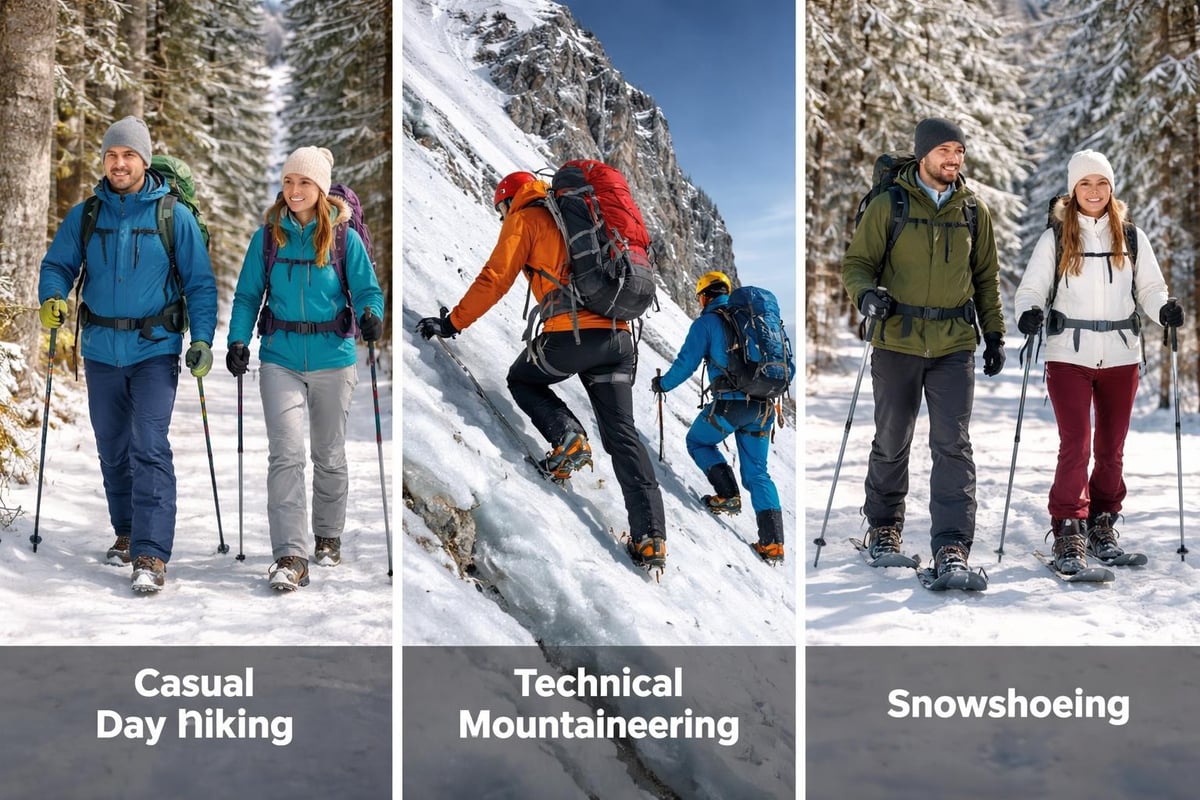
Snowshoeing presents unique requirements, with specialized pants offering wider cuts to accommodate snowshoe bindings and gates. These designs prevent binding whilst maintaining weather protection.
Day hiking in moderate conditions allows lighter-weight options with fewer technical features. Shell pants with minimal insulation suit most UK winter day hikes, where you'll likely encounter variable conditions requiring adaptability.
Multi-day expeditions demand maximum durability and feature-rich designs. Reinforced construction withstands extended use, whilst comprehensive pocket systems organise essential items. Winter camping enthusiasts particularly value these robust designs.
Women-Specific Designs
Women's hiking snow pants differ from unisex or men's options through more than just sizing. Female-specific designs incorporate higher waists, shaped hips, and adjusted thigh-to-waist ratios that better accommodate women's physiology.
Women's winter hiking pants address specific needs through thoughtful design modifications. Pocket placement considers shorter torsos, whilst suspender attachment points sit at appropriate positions. These details dramatically impact comfort during extended wear.
Avoid assuming smaller sizes in men's ranges will suffice. Improperly fitting hiking snow pants compromise both comfort and performance, regardless of their technical specifications. Proper fit trumps all other considerations.
Making Your Final Decision
Selecting ideal hiking snow pants requires balancing multiple factors against your specific needs and conditions. Consider your typical hiking environments, activity intensity, and personal temperature regulation characteristics.
Cold-natured individuals benefit from insulated designs or should invest in quality base layers beneath shell pants. Those who run warm find shells with excellent ventilation essential for comfort. Your personal physiology significantly influences which design approach works best.
Frequency of use justifies investment levels. Weekend warriors gain little from £500 mountaineering pants, whilst committed winter adventurers quickly appreciate premium features and durability. Assess your commitment level honestly before investing.
UK conditions favour versatile designs handling variable weather. Understanding winter weather patterns helps you select appropriate protection levels. The British climate's unpredictability demands adaptable gear rather than highly specialized options.
Trial and Return Policies
Leverage retailers' return policies to test hiking snow pants in realistic conditions. Many outdoor specialists allow field testing with return privileges if garments prove unsuitable. Wear them around your home, perform mobility tests, and assess comfort before committing fully.
Read reviews from hikers with similar body types and activity patterns. Individual experiences vary dramatically, but patterns emerge across multiple reviews highlighting consistent strengths or weaknesses. Expert reviews like those from Outdoor Gear Lab provide valuable insights into real-world performance.
Integration with Your Complete Kit
Hiking snow pants function as one component within your complete winter system. They must complement your jacket, creating adequate overlap preventing exposure gaps. Quality waterproof jackets pair with well-designed pants to form comprehensive weather protection.
Base layer choices directly impact snow pant performance. Moisture-wicking fabrics transport perspiration away from skin, allowing your shell's breathability to function effectively. Cotton base layers undermine even the finest hiking snow pants through moisture retention.
Boot selection influences which pants work best. Taller boots require adequate cuff width, whilst low-cut designs benefit from integrated gaiters or compatible aftermarket options. Consider your complete footwear system when evaluating pants.
Seasonal Adaptability
Quality hiking snow pants serve beyond deep winter. Shoulder season conditions in spring and autumn often demand similar protection against wet, cold weather. Versatile designs transition across seasons, maximizing your investment.
Spring hiking presents unique challenges combining melting snow, rain, and variable temperatures. Shell pants with good ventilation handle these conditions admirably, shedding moisture whilst allowing temperature regulation through layering adjustments.
Autumn expeditions into high country encounter early season snow and freezing temperatures. Your hiking snow pants provide insurance against unexpected weather shifts, essential when conditions deteriorate rapidly. British mountain weather's fickleness makes carrying appropriate gear non-negotiable for safety.
Choosing the right hiking snow pants transforms winter adventures from endurance tests into enjoyable explorations. By understanding the features, materials, and design considerations outlined above, you can select trousers that keep you comfortable, dry, and protected across diverse winter conditions. When you're ready to complement your winter wardrobe with reliable shelter solutions and quality outdoor equipment, Outhaus offers exceptional gear designed to enhance your camping and hiking experiences with the same attention to performance and durability that characterises superior snow pants.