

Camping and Survival Gear Guide: Essentials for 2025 Adventures
RankPill on 25th Nov 2025
2025 is set to be a landmark year for outdoor enthusiasts, with more people than ever seeking adventure and self-reliance in nature. The appeal of escaping into the wild is growing, but so is the need for the right camping and survival gear.
Having dependable equipment is essential for safety, comfort, and enjoyment in unpredictable environments. The latest innovations in camping and survival gear are transforming how we experience the outdoors, making every trip safer and more rewarding.
This comprehensive guide will outline must-have camping and survival gear for 2025, review new advancements, and offer actionable advice for every adventurer. Get ready to explore essential shelter, sleep systems, clothing, cooking solutions, hydration, safety, navigation, and the latest gear trends.
Essential Shelter Solutions for 2025
The right shelter is the foundation of every successful outdoor experience. As camping and survival gear evolves, modern shelters offer a wider range of options for every type of adventurer. Understanding the latest solutions ensures you stay comfortable, protected, and ready for anything nature presents.
Types of Modern Camping Shelters
Selecting the right shelter is one of the most important decisions when choosing camping and survival gear. Tents remain the most popular choice, offering reliable protection, easy setup, and a range of sizes for solo or group use. Bivvies provide a lightweight, minimalist option ideal for those seeking agility and a closer connection to nature.
Tarps are versatile, allowing for creative setups and excellent packability. Swags, especially popular among solo campers, combine the benefits of a tent and a sleeping bag in one. According to recent UK statistics, tarps and bivvies are seeing a 20% annual growth in popularity, while swags are gaining ground due to their durability and simplicity. For a deeper look into the advantages of swags, see the Benefits of Swag Camping.
Each shelter type impacts comfort and safety differently. Tents offer enclosed protection, while tarps and bivvies require more skill but weigh less. Swags provide all-in-one reliability, making them an emerging favourite.
Weatherproofing and Durability
Weatherproofing is a top priority for any camping and survival gear. Understanding waterproof ratings, such as hydrostatic head measurements, helps ensure your shelter withstands heavy rain. Materials like canvas, polycotton, and advanced synthetics each offer unique strengths: canvas excels in all-season durability, while synthetics provide a lighter carry.
Reinforced seams, storm flaps, and well-placed ventilation keep interiors dry and comfortable. While ultralight materials offer portability, they may compromise on long-term durability. Many campers are choosing canvas tarps for their resilience across all seasons.
Balancing longevity with weight is crucial. Durable shelters may add grams to your pack, but they often provide greater peace of mind during unpredictable weather.
Innovations in Shelter Design
Innovative design is rapidly reshaping the landscape of camping and survival gear. Smart tents now feature solar panels and integrated power banks, allowing you to charge devices off-grid. Pop-up and instant setup shelters minimise pitching time, while modular systems let you customise layouts for solo or group needs.
Reflective and insulating fabrics are growing in use, providing year-round comfort in both hot and cold conditions. In fact, forecasts for 2025 suggest that 35 percent of campers will select tech-enabled shelters, highlighting a shift towards convenience and adaptability.
These advancements mean today's shelters do more than offer basic protection. They enhance safety, comfort, and flexibility for every kind of adventure.
Choosing the Right Shelter for Your Adventure
When evaluating camping and survival gear, consider your destination’s climate, the length of your trip, and the size of your group. Backpackers may prioritise lightweight shelters, while car campers can afford extra comfort. Adaptability is key for bushcraft, overlanding, and wild camping.
For example, a family camping trip often demands a spacious, weatherproof tent, while a solo expedition might call for a lightweight swag or bivvy. Use this checklist to assess your shelter needs:
- Weather resistance and ventilation
- Weight and packed size
- Ease of setup
- Durability and repairability
- Compatibility with your sleep system
Careful selection ensures your shelter matches your adventure goals and environmental demands.
Outhaus: Durable Canvas Swags and Tarps for Reliable Shelter
Outhaus stands out as a leading UK supplier of premium canvas swags and tarps, offering camping and survival gear designed for reliability and comfort. Their product range includes swags, tarps, and traditional tipis, all crafted for varied camping styles.

Customers value Outhaus for exceptional durability, robust weather resistance, and materials built to last. The brand’s lifetime warranty underscores their commitment to quality. Whether you are wild camping, bushcrafting, or embarking on a remote adventure, Outhaus provides peace of mind with gear that can withstand the elements.
Choosing Outhaus means investing in shelter solutions trusted by experienced adventurers seeking performance and dependability.
Sleep Systems and Comfort Essentials
A restful night is essential for any successful camping and survival gear setup. Quality sleep boosts energy, sharpens focus, and keeps you prepared for whatever nature throws your way. In 2025, sleep systems are evolving to offer greater comfort, adaptability, and protection in the wild.

Sleeping Bags, Quilts, and Liners
Choosing the right sleeping bag is crucial for camping and survival gear. Temperature ratings help you match your bag to the season, ensuring you stay warm on chilly nights or cool during summer trips. Down fill is lightweight and compressible, ideal for backpackers, though synthetic fill offers better performance in wet conditions.
There are several shapes to consider:
| Type | Pros | Cons |
|---|---|---|
| Mummy | Warm, lightweight | Less room to move |
| Rectangular | Spacious, versatile | Heavier, less warm |
| Hybrid | Balance of comfort and heat | Can be pricier |
Liners add an extra layer of hygiene and warmth. The latest trend in camping and survival gear is modular sleep systems, allowing campers to adapt their setup for changing seasons and adventure types.
Sleeping Mats and Pads
A good mat is a non-negotiable part of camping and survival gear, as it insulates you from the cold ground and boosts comfort. Mats come in self-inflating, closed-cell foam, and air pad varieties. The R-value measures insulation, helping you choose the right mat for expected temperatures.
Backpackers often prefer compact air pads, while car campers may opt for thicker, more luxurious options. Common issues like punctures or deflation can be mitigated by carrying a small repair kit. Did you know that 80% of campers report improved sleep with insulated mats? Selecting the right mat can make all the difference in your outdoor experience.
Pillows, Blankets, and Comfort Add-ons
Comfort essentials are increasingly important in modern camping and survival gear. Inflatable pillows save space, while compressible pillows offer a plush feel. Merino wool blankets are praised for their warmth, moisture control, and hypoallergenic properties.
Camp cots, hammocks, and seat pads add versatility and extra comfort. Multi-use blankets are a rising trend, doubling as picnic rugs, emergency wraps, or extra bedding. For those interested in eco-friendly options, the Guide to Sustainable Outdoor Gear highlights innovative, planet-conscious comfort solutions.
Hygiene and Sleep Quality Tips
Maintaining hygiene is a priority for anyone using camping and survival gear. To manage condensation, ventilate your shelter and choose breathable sleep materials. Always keep your sleep gear dry and air it out during the day to prevent mildew.
Establishing a sleep routine, such as winding down with a warm drink or reading, can improve rest. Use bug nets to fend off insects and earplugs to block out noise. Be mindful of temperature swings by layering your sleep system, ensuring you stay comfortable in all conditions.
Packing and Caring for Sleep Gear
Proper care extends the life of your camping and survival gear. Use compression sacks for packing, but store sleeping bags loosely at home to prevent damage. Clean your sleep gear according to manufacturer instructions, paying special attention to zips and seams.
During the off-season, store everything in a dry, ventilated area to avoid mildew. Always pack a basic repair kit with patches and extra straps for emergency fixes in the field. With these habits, your sleep system will be ready for every adventure.
Clothing and Footwear for All Conditions
Selecting the right clothing and footwear is critical for any outdoor adventure. With unpredictable weather and challenging terrain, your choices can make or break your experience. In 2025, advancements in camping and survival gear are transforming how we prepare for all conditions, making it easier than ever to stay safe, dry, and comfortable.

Layering Systems for Versatility
Mastering the three-layer principle is foundational in camping and survival gear. Start with a moisture-wicking base layer, like merino wool or synthetic blends, to keep sweat away from your skin. Next, add an insulating layer, such as fleece or down, to retain body heat. Finally, a shell layer provides protection from wind and rain.
Adapt your layers based on weather and activity. Quick-dry and breathable materials are essential for comfort during sudden temperature changes. Many of the top camping gear trends in the U.S. for 2025 highlight modular layering systems, reflecting a wider shift in camping and survival gear design.
Merino wool remains a top choice for base layers, offering natural odour resistance and warmth. Always pack extra layers to adjust for shifting conditions.
Weatherproof Outerwear
When it comes to camping and survival gear, outerwear must stand up to the elements. Look for waterproof and breathable jackets rated with a high hydrostatic head for rain protection. Trousers, gaiters, and overtrousers add extra defence against wet and cold environments.
Ventilation features, like pit zips and adjustable cuffs, help regulate temperature and prevent overheating. Inadequate outerwear leads to 60 percent of gear failures, so invest in quality materials and construction.
Choose outerwear that is lightweight yet durable, with reinforced seams and storm flaps for added resilience. Proper outerwear ensures you remain comfortable and protected, no matter the weather.
Footwear: Boots, Shoes, and Socks
The right footwear is a cornerstone of reliable camping and survival gear. Hiking boots offer ankle support and protection, ideal for rugged trails and multi-day treks. Trail runners suit lighter loads and faster movement, while camp shoes provide comfort after a long day.
Proper fit is vital to prevent blisters and fatigue. Waterproofing keeps feet dry in wet conditions, while breathable designs reduce sweat and discomfort. Wool socks are favoured for insulation and moisture management, helping to prevent blisters.
A case study shows that for multi-day expeditions, switching between boots and trail runners can reduce foot fatigue. Always test new footwear before committing to a trip.
Accessories for Safety and Comfort
Accessories complete your camping and survival gear setup, offering vital protection and comfort. Hats and gloves help regulate body temperature in both hot and cold weather. Scarves, buffs, and balaclavas add adaptable coverage for wind and sun.
UV-protective and insect-repellent clothing shields you from environmental hazards. Gloves designed for camp tasks make handling gear easier and safer, while insulated options keep hands warm during cold snaps.
Choose accessories that are lightweight, packable, and suited to your specific adventure. These small additions can greatly enhance your overall safety and enjoyment outdoors.
Cooking, Hydration, and Food Storage
Mastering your meals and hydration in the outdoors is an essential part of selecting the right camping and survival gear. Whether you are embarking on a weekend getaway or a multi-day trek, your approach to cooking, water, and food storage can have a significant impact on your safety and enjoyment.
Camp Stoves and Cooking Systems
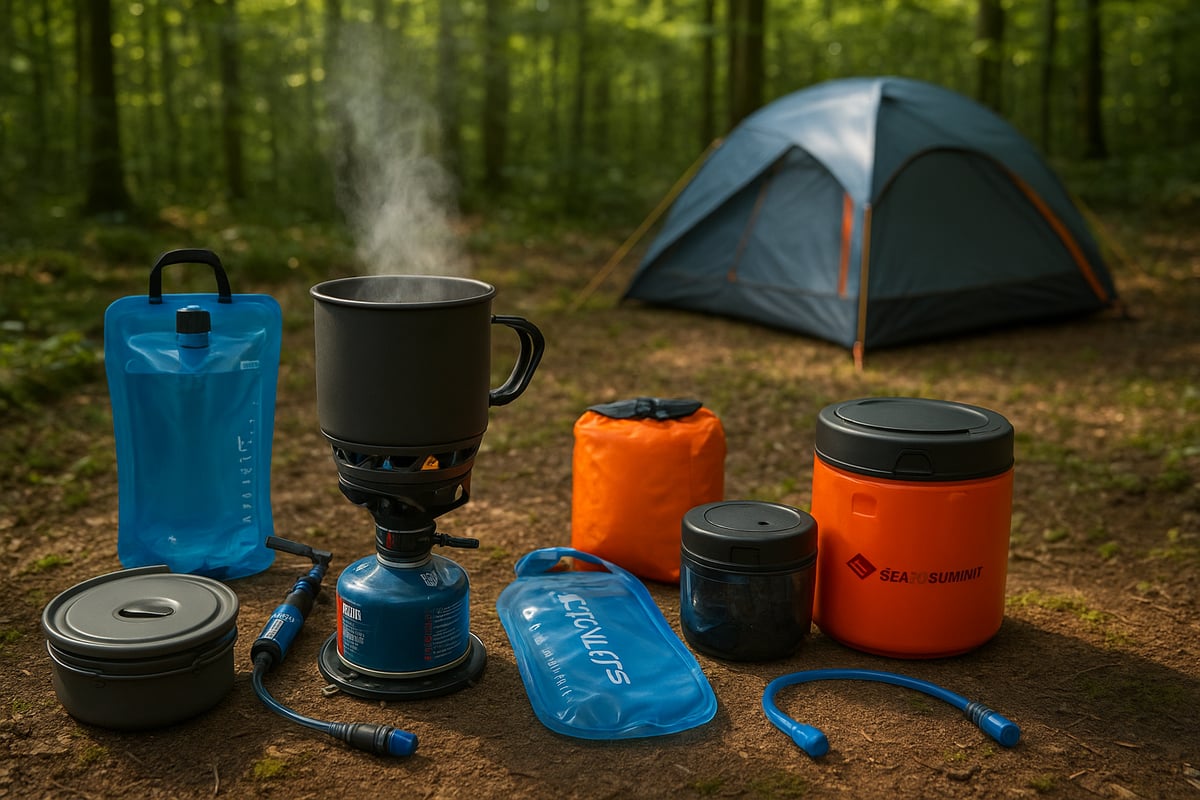
Choosing the right stove is central to your camping and survival gear. Popular types include canister stoves, liquid fuel models, wood-burning units, and versatile multi-fuel options. Canister stoves are compact and easy to use, while liquid fuel stoves perform well in cold conditions. Wood-burning stoves offer fuel independence but require more attention to local fire rules.
Safety is crucial. Always use stoves on stable surfaces and store fuel away from flames. Integrated stove kits streamline meal prep, making them ideal for quick, efficient cooking. For more practical tips and gear recommendations, see these Campfire Cooking Hacks. The right cooking system balances portability, efficiency, and safety for any adventure.
Cookware and Utensils
Selecting cookware is another vital aspect of camping and survival gear. Aluminium pots are lightweight and conduct heat well, titanium is ultralight but pricier, and stainless steel is durable for heavy use. Nesting cookware sets save space in your pack, while essentials like sporks, knives, and compact cutting boards keep meal prep simple.
Cleaning is easier with non-stick coatings, but these require gentle utensils. Maintenance is key: dry all cookware thoroughly to prevent rust and damage. A well-chosen cookware kit ensures you eat well without carrying unnecessary weight.
Water Filtration and Purification
Water safety is non-negotiable in your camping and survival gear. Methods include pump filters, squeeze filters, UV purifiers, and chemical treatments. Each has pros and cons, as shown below:
| Method | Weight | Speed | Removes | Best Use |
|---|---|---|---|---|
| Pump Filter | Medium | Moderate | Bacteria | Groups, basecamps |
| Squeeze Filter | Light | Fast | Bacteria | Solo, fastpackers |
| UV Purifier | Light | Very fast | Viruses | Treks, clear water |
| Chemical | Light | Slow | Viruses | Emergencies, backup |
Capacity matters for groups, and regular maintenance extends filter life. In the UK, 70 percent of wild campers now carry portable filters, reflecting growing awareness of waterborne risks.
Hydration Systems and Bottles
Staying hydrated is fundamental when choosing camping and survival gear. Hydration bladders let you sip on the go, while bottles are easy to refill and clean. Collapsible containers save space when empty, making them ideal for backpackers.
Monitor your water intake throughout the day, especially in hot or cold weather. Insulated bottles help keep drinks at the right temperature. For winter trips, prevent freezing by storing bottles upside down. In summer, refill frequently and use electrolyte tablets as needed.
Food Storage and Bear Safety
Proper food storage protects both you and wildlife, making it a priority in camping and survival gear. Options include food bags, hard canisters, and hanging systems. Bear-proof canisters are now mandatory in some parks, while odour-proof bags deter smaller animals.
When planning meals, balance pack weight with nutrition and taste variety. Hang food away from your sleeping area to avoid attracting animals. Regulations in popular parks often require specific food storage methods, so always check local rules before your trip.
Safety, First Aid, and Emergency Preparedness
Preparation is paramount when venturing outdoors. Reliable camping and survival gear can mean the difference between a minor hiccup and a major emergency. This section explores essential equipment and expert strategies to keep every adventurer safe and ready for unexpected challenges.
Comprehensive First Aid Kits
Every adventure should begin with a comprehensive first aid kit tailored to your trip. Essential items include adhesive bandages, sterile gauze, antiseptic wipes, tweezers, pain relief medication, and blister care supplies. For extended journeys or larger groups, add trauma dressings, a digital thermometer, and extra prescription medicines.
Customising your kit to match group size, duration, and destination is key. For instance, a solo wild camper will need different supplies than a family on a multi-day trek. According to recent reports, one in four campers uses their kit during a typical outing, underscoring the importance of integrating first aid into your camping and survival gear. Regularly check expiry dates and restock used items to maintain readiness.
Navigation Tools and Communication
Getting lost is a genuine risk in the outdoors, so navigation tools are crucial components of any camping and survival gear setup. Reliable navigation starts with physical maps and a quality compass, both unaffected by battery life or signal loss. GPS devices and smartphone apps add convenience, but always carry a backup power source such as a solar charger or power bank.
For communication, pack a whistle, signal mirror, and consider a two-way radio for remote areas. In emergencies, signalling equipment can be life-saving. Navigation mistakes are a leading cause of search and rescue callouts, and with advancements in technology, innovations like soft robotics for search and rescue are shaping the future of outdoor safety. Always inform someone of your route before heading out.
Fire Starters and Emergency Lighting
Fire provides warmth, light, and a way to signal for help, making fire starters vital camping and survival gear. Carry waterproof matches, a reliable lighter, and a ferro rod for redundancy. Each method has its strengths, so pack at least two in separate places.
For emergency lighting, choose a headlamp with spare batteries, a compact torch, and a lantern for camp use. LED models offer long battery life and adjustable brightness. Always pack extra batteries or a solar charger. Follow fire safety protocols, check local regulations, and practise safe fire management to protect both yourself and the environment.
Emergency Shelters and Survival Gear
Unexpected weather or accidents can leave you exposed, so always include emergency shelters in your camping and survival gear. Space blankets, reflective bivvy bags, and lightweight tarps provide instant protection from the elements. Personal locator beacons (PLBs) and signal panels are essential for attracting help if stranded.
A well-chosen multi-tool or survival knife can handle tasks like cutting, repairing gear, or food preparation. Solo adventurers are especially encouraged to carry a compact survival kit covering fire, shelter, and signalling. For more tips, consider reviewing 5 Survival Skills You'll Be Glad You Learnt to complement your gear with practical know-how. Regularly practise using your equipment to ensure you are prepared when it matters most.
Emerging Trends and Innovations in Camping Gear
As we move into 2025, the landscape of camping and survival gear is rapidly evolving. Manufacturers and outdoor enthusiasts are driving change, seeking solutions that offer greater sustainability, smarter technology, lighter packs, and inclusivity for all adventurers. Let us explore the most significant trends that are shaping the future of camping and survival gear.
Sustainable and Eco-Friendly Gear
Sustainability is now at the core of camping and survival gear innovation. Brands are introducing biodegradable materials and packaging, along with recycled fabrics for tents, sleeping bags, and clothing. There is also a surge in gear repair initiatives, empowering users to extend the life of their equipment rather than replacing it.
The demand for eco-friendly products is growing fast, with 40% of UK campers now prioritising sustainability when making purchases. According to 2025 Camping Trends: Social Media, Luxury & Sustainability Shifts, social media is amplifying awareness and driving this shift. As a result, expect to see more brands adopting greener manufacturing and packaging practices within camping and survival gear.
Smart Technology Integration
Technology is transforming the way campers interact with their environment and equipment. Solar-powered lights, chargers, and even heated sleeping bags are becoming common in the latest camping and survival gear. Many shelters now feature integrated solar panels and power banks for on-the-go charging.
GPS-enabled devices, app-connected equipment, and wearable health trackers are also on the rise, offering safety and convenience. The Camping Equipment Market Growth Forecast highlights that innovation is a key factor driving market growth through 2030. For campers, these developments mean greater autonomy and peace of mind when venturing into remote areas.
Ultralight and Modular Systems
Ultralight camping and survival gear is gaining traction among backpackers and fastpackers who prioritise speed and efficiency. Manufacturers are using advanced materials to reduce weight without sacrificing durability. Modular systems allow users to customise their setups for each trip, whether it is a solo overnight or a group expedition.
These innovations provide a balance between comfort and practicality. While some may trade a bit of luxury for a lighter pack, the flexibility of modular gear appeals to a wide range of adventurers. In 2025, expect ultralight solutions to become even more prevalent in camping and survival gear selections.
Inclusive and Adaptive Gear
The outdoor industry is making strides in designing camping and survival gear for everyone. New products cater to diverse body types, abilities, and needs, ensuring that families, children, and even pets can enjoy the outdoors safely and comfortably. Accessibility improvements are now standard across many mainstream brands.
This shift is more than a trend; it reflects a broader commitment to inclusivity. The inclusive gear market is projected to grow by 20% in 2025, highlighting its importance. Adaptive equipment is opening up wild spaces for a wider audience, making camping and survival gear truly universal.